
 Global



Big Data Analytics: 4-Step Process, Challenges and AI Integration
The contemporary global economy is currently navigating a period of profound structural change, primarily precipitated by the exponential growth of information and the sophisticated computational methods used to interpret it. As organisations transition from legacy operational models to those defined by data-driven intelligence, the discipline of big data analytics has established itself as the essential framework for strategic resilience. This transition is especially evident in Singapore, where the convergence of government-backed initiatives and a burgeoning technology sector has created a critical demand for professionals capable of managing complex data lifecycles.
What is big data analytics? Core Concepts and Characteristics
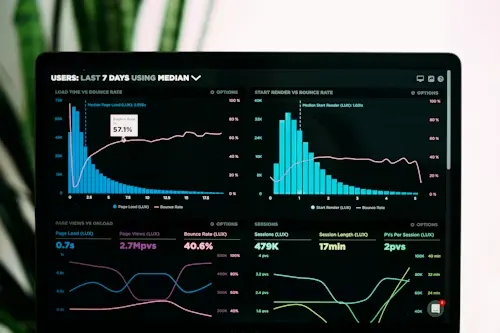
In technical terms, big data refers to datasets characterised by the “Five Vs”: Volume, Velocity, Variety, Veracity, and Value, which exceed the processing capabilities of traditional database systems. However, the raw existence of this information is insufficient for corporate progress; it requires the systematic application of big data analytics to uncover the hidden patterns, correlations, and market trends that inform high-stakes decision-making.
The 5Vs of Information Assets
The five dimensions provide a structured approach to understanding the opportunities inherent in massive datasets.
Implementing big data analytics requires organisations to manage massive, high-speed information streams, which introduces significant big data challenges, particularly regarding accuracy and reliability.
Furthermore, the integration of big data analytics and artificial intelligence depends on the synergy of these characteristics, using veracity to improve machine learning precision and transform raw data into competitive strategic value.
| Dimension | Modern Big Data Context | Academic and Industry Impact |
|---|---|---|
| Volume | Petabyte-scale datasets from global networks. | Requires distributed systems and NoSQL architectures. |
| Velocity | Real-time stream processing for instant insights. | Facilitates automated trading and real-time fraud detection. |
| Variety | Dominance of unstructured video, audio, and text. | Necessitates skills in machine learning and deep learning. |
| Veracity | Growing concern over data integrity and AI noise. | Drives the need for data cleaning and validation expertise. |
| Value | The conversion of raw data into strategic assets. | Measured by increased productivity and revenue growth. |
Within the SIM x Wollongong curriculum, students are introduced to these concepts not as abstract theories, but as practical challenges. The Database Systems module investigates the transition from relational models to distributed NoSQL database technologies, ensuring students understand the architectural requirements for handling modern data variety and volume. By mastering these core concepts, graduates are prepared to contribute to the 60% of organisations that have already integrated AI and big data analytics into their core operations to maintain a competitive advantage.
The 4 Steps of Big Data Analytics Process
The transition from raw information to strategic insight is a rigorous four-step systemic process. This methodology ensures that data is not merely collected, but refined into a state that can support high-level machine learning models and executive decisions. Each stage requires a distinct set of technical competencies, which form the bedrock of the learning outcomes.
Data Generation and Collection
The foundational stage of big data analytics begins with the acquisition of raw data from a multitude of sources. This stage involves identifying relevant information assets and extracting them for further processing.
- Diverse Data Streams: Information originates from enterprise applications, web pages, internet-connected sensors (IoT), and transactional records.
- Structured vs Unstructured: Professionals must collect structured data (like relational databases) alongside semi-structured (JSON, XML) and unstructured data (emails, videos, and social media).
- Source Integrity: Ensuring accuracy at the source is critical. Selection bias during collection can compromise the entire analytical project, leading to flawed conclusions.
The partnership between SIM and UOW offers the Database Systems module, allowing students to learn the technical skills required to aggregate diverse data types.
Data Processing and Cleaning
Once collected, the raw data enters the preprocessing stage, often described as the most time-consuming phase. The goal is to remove “noise” and inconsistencies.
- Data Cleansing: This involves correcting errors, filling in missing values, and removing duplicate or redundant records to ensure statistical accuracy.
- Normalisation and Transformation: Raw data is converted into consistent formats. For example, standardising date formats or changing text into numerical codes that can be efficiently processed by machine learning algorithms.
- Validation: Data is checked against specific business rules and logic to ensure its relevance and integrity before it moves further into the pipeline.
To master the algorithmic logic required for removing duplicates and transforming variables, this Computer Science programme offers the Object Oriented Design & Programming and Java Programming modules, allowing students to learn the skills to develop robust automated cleansing scripts.
Data Storage and Management
Refined data must be securely stored in architectures that support high-speed retrieval and complex querying.
- Distributed Architectures: Massive datasets are often housed in environments like Hadoop Distributed File System (HDFS) or Apache Spark clusters, which allow for parallel processing across multiple nodes.
- Data Lakes vs Warehouses: While data warehouses store structured, processed information for reporting, data lakes are used to hold vast amounts of raw data in its native format until needed.
- Security and Compliance: Proper management ensures data longevity while maintaining privacy standards such as GDPR and CCPA. This is critical for legal auditing and regulatory compliance in modern enterprise environments.
Data Analysis, Visualisation and Deployment
The final stage of big data analytics involves the application of mathematical models to extract value and the presentation of results.
- Analytical Methods: This includes descriptive, predictive, and prescriptive analytics. Advanced techniques like data mining and machine learning are employed to identify trends and forecast future outcomes.
- Data Visualisation: Results are presented via interactive dashboards and graphs, simplifying complex patterns for non-technical stakeholders.
- MLOps and Deployment: In sophisticated environments, models are deployed into production using Machine Learning Operations (MLOps). This includes continuous monitoring for model drift, where accuracy degrades due to changes in real-world data patterns.
Navigating Common Big Data Challenges in Modern Enterprise

Despite its immense potential, implementing big data presents organisations with significant technical, ethical, and human hurdles. As the volume and value of information increase, so does the risk of mismanagement, necessitating robust governance and security frameworks. For future professionals, understanding these obstacles is just as critical as mastering the big data analytical tools. The primary challenges include:
- Data Privacy and Regulatory Complexity: Stricter global laws, such as the GDPR and Singapore’s PDPA, create a “compliance minefield,” where mismanagement can lead to severe financial penalties and reputational damage.
- Evolving Cybersecurity Threats: Cybercriminals are increasingly using AI to launch sophisticated ransomware and phishing attacks, making traditional security measures insufficient.
- The Anonymisation Myth and the Mosaic Effect: Harmless individual data points can become privacy nightmares when combined via analytics, potentially re-identifying individuals.
- Data Integrity and the “Garbage In, Garbage Out” Principle: Incomplete or biased data leads to flawed AI models, which can amplify societal inequalities or result in incorrect business strategies.
To address these big data challenges, the SIM x Wollongong programme integrates core modules on cybersecurity and data management. Students learn to implement encryption, multi-factor authentication, and zero-trust architectures to safeguard sensitive information. By focusing on “Privacy-First Architecture,” the curriculum prepares graduates to help organisations balance innovation with responsibility, ensuring that their big data analytics initiatives are both effective and ethically sound.
The Synergy Between Big Data Analytics and Artificial Intelligence

The relationship between big data analytics and artificial intelligence is fundamentally interdependent. Big data provides the “fuel” via massive datasets, while AI provides the “engine” to convert this into intelligence. This synergy is essential to move beyond simple reporting toward autonomous and predictive decision-making.
AI accelerates analysis by processing information at speeds unattainable by humans. Through machine learning and natural language processing, AI can automatically categorise incoming data and identify complex patterns. Conversely, big data is the foundation for AI, as models require massive scales of high-quality data to learn. As systems collect more data, AI models become more accurate and personalised over time, creating a continuous improvement loop.
| AI Subfield | Role in Big Data Analytics | Industry Impact |
|---|---|---|
| Machine Learning (ML) | Identifies patterns and executes tasks without explicit programming. | Hyper-personalisation in retail and e-commerce. |
| Deep Learning | Uses neural networks to find complex patterns in massive data. | Advanced image and speech recognition systems. |
| Natural Language Processing (NLP) | Interprets and generates human language from unstructured text. | Sentiment analysis and automated customer support. |
| Predictive Analytics | Forecasts future trends based on historical performance. | Demand forecasting and inventory optimization. |
The modules such as CSCI323 (Modern Artificial Intelligence) and CSCI303 (Foundations of Artificial Intelligence) allow students to explore these synergies in depth. They learn how to implement algorithms that can process unstructured data, such as images or text, using state-of-the-art platforms. This education ensures that students are not merely observers of the AI boom but active participants who can design and deploy systems that turn complex data into competitive intelligence.
Developing Expertise in Artificial Intelligence and Big Data Analytics
As the demand for data-driven expertise rises, pursuing advanced education is a strategic career move. The Singapore Institute of Management (SIM) provides an academic path through its partnership with the University of Wollongong. Ranked 184th globally and 13th in Australia (QS 2026), it also shines as the 16th best young university in the world (THE Young University Rankings 2024).
The curriculum is designed at the Bachelor’s Degree level to provide a deep understanding of technical and ethical computation. Students undertake modules covering essential disciplines such as algorithms and data structures, object-oriented programming, and big data management.
To acquire these specialised skills, students can explore the Bachelor of Computer Science (Artificial Intelligence and Big Data) offered at SIM.