
 Global



What Is Big Data Analytics? Tools, Applications & Real-World Examples (2026)
Every digital action creates data. When people surf the Internet, they leave behind information that can be studied and used. As businesses adopt AI in their daily work, utilising cloud platforms and real-time operating systems, big data analytics empowers them to draw sound conclusions from vast, complex datasets. In this AI-driven era, proficiency in big data analytics will become a valuable competitive advantage.
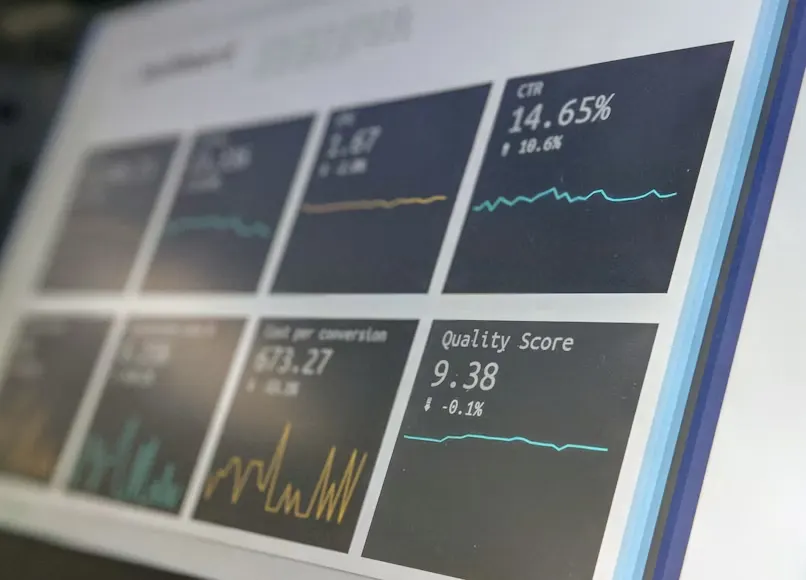
Alt text: Big data analytics dashboard
What Is Big Data Analytics?
Big data analytics is the process of examining large, varied and fast-moving data sets to find patterns, trends, relationships and useful insights. Traditional data analysis may focus on smaller, structured spreadsheets. Big data analytics, however, deals with data that may be too large, too complex or too fast-changing for conventional tools to manage effectively.
In simple terms, big data analytics helps organisations move from raw information to practical decisions. A company may use it to understand customer behaviour. A hospital may use it to improve resource planning. A logistics provider may use it to plan better delivery routes. The value comes not from collecting data alone, but from knowing how to interpret and apply it responsibly.
To understand the scope of big data, many experts use the 5 Vs of Big Data.
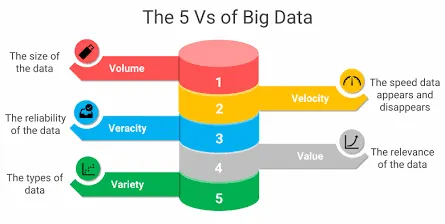
Big data analytics helps organisations turn large data sets into useful insights.
- Volume: This refers to the large amount of data being generated. Examples include social media posts, online transactions, sensor readings and app usage data.
- Velocity: This is the speed at which data is created, received and processed.
- Variety: Data comes in many formats. It may be structured, such as database records; semi-structured, such as XML or JSON files; or unstructured, such as images, videos, emails and documents.
- Veracity: This refers to the quality, reliability and accuracy of data. Poor-quality data can lead to weak decisions and inaccurate machine learning results.
- Value: This is the practical benefit that can be gained from data. The goal is to turn information into better decisions, stronger services or more efficient systems.
Top 10 Tools of Big Data Analytics
The landscape of big data analytics tools includes storage systems, processing frameworks, programming languages, visualisation platforms, and machine learning tools.
| Tool | Category | Best For |
|---|---|---|
| Apache Hadoop | Distributed storage and processing framework | Large-scale batch processing |
| Apache Spark | Large-scale analytics engine | Real-time processing, machine learning and data engineering |
| Tableau | Data visualisation platform | Interactive dashboards and business reporting |
| Microsoft Power BI | Business intelligence platform | Business reports and Microsoft-based workflows |
| Python | Programming language | Data cleaning, modelling, automation and AI projects |
| R | Programming language | Statistics, research and exploratory data analysis |
| SAS | Commercial analytics platform | Regulated industries such as banking, insurance and healthcare |
| Splunk | Machine data and log analytics platform | Cybersecurity, IT monitoring and infrastructure analytics |
| KNIME | Open-source visual analytics platform | Low-code analytics workflows |
| RapidMiner | Data science and machine learning platform | Quick prototyping and applied analytics projects |
1. Apache Hadoop
Apache Hadoop is an open-source framework for distributed storage and processing. It is designed to handle large data sets by spreading data across clusters of computers.
- Strength: Useful for large-scale distributed storage and batch processing.
- Limitation: Setup and maintenance can be complex for beginners.
- Common users: Data engineers, system architects and enterprise technology teams.
2. Apache Spark
Apache Spark is a widely used analytics engine for large-scale data processing. It supports data engineering, data science and machine learning tasks across single machines or clusters. Spark can be significantly faster than traditional Hadoop MapReduce for certain workloads, especially where in-memory processing is useful, but performance depends on the task size and system design.
- Strength: Supports batch processing, streaming, SQL, machine learning and multiple languages.
- Limitation: It may require careful memory and cluster management at scale.
- Common users: Data engineers, machine learning engineers and analytics teams.
3. Tableau
Tableau is a data visualisation platform that helps users create interactive dashboards. It is often used to explain complex data to non-technical audiences.
- Strength: Strong dashboard design and visual storytelling features.
- Limitation: Licensing costs may be a consideration for some organisations.
- Common users: Business analysts, marketing teams and management reporting teams.
4. Microsoft Power BI
Microsoft Power BI is a business intelligence platform that connects well with Excel, Microsoft 365 and Azure. It is popular among organisations that already use Microsoft tools.
- Strength: Accessible for Excel users and useful for business reporting.
- Limitation: Advanced modelling and customisation may require further learning.
- Common users: Business analysts, finance teams and small to medium-sized organisations.
5. Python
Python is a programming language commonly used in data analytics, machine learning and artificial intelligence. Libraries such as Pandas, NumPy, Scikit-learn and TensorFlow make it useful for data cleaning, modelling and automation.
- Strength: Flexible, widely supported and useful across many data-related roles.
- Limitation: Performance may need optimisation for very large workloads.
- Common users: Students, data analysts, data scientists and AI researchers.
6. R
R is a programming language commonly used for statistics, data visualisation and academic research. It is especially useful for statistical modelling and exploratory data analysis.
- Strength: Strong statistical and visualisation packages.
- Limitation: It may feel less general-purpose than Python for some software development tasks.
- Common users: Researchers, statisticians and analysts in finance or healthcare.
7. SAS
SAS is a commercial analytics platform used in industries that require strong governance, auditability and reliability, such as banking, insurance and healthcare.
- Strength: Strong support, security and enterprise governance features.
- Limitation: It can be costly and less flexible than open-source tools.
- Common users: Large enterprises, clinical research teams and financial institutions.
8. Splunk
Splunk is often used to analyse machine-generated data, including logs from applications, networks, devices and security systems. It is especially relevant for IT operations and cybersecurity.
- Strength: Strong search, monitoring and real-time alerting features.
- Limitation: Costs can increase as data volume grows.
- Common users: Cybersecurity teams, IT operations teams and infrastructure engineers.
9. KNIME
KNIME is an open-source analytics platform that allows users to build data workflows visually. It is useful for learners who want to understand data processes without writing large amounts of code at first.
- Strength: Visual workflow design and low-code accessibility.
- Limitation: Very complex workflows may become difficult to manage visually.
- Common users: Business analysts, students and non-programmers exploring analytics.
10. RapidMiner
RapidMiner provides tools for data preparation, machine learning and model development. It is often used for quick prototyping and applied analytics projects.
- Strength: Useful for testing analytics workflows and machine learning models quickly.
- Limitation: Some advanced or large-scale use cases may require paid options.
- Common users: Data science teams, analysts and learners working on applied projects.
Key Industry Applications of Big Data Analytics
The real value of big data appears when it is used to solve practical problems. Today, the applications of big data analytics can be seen across education, healthcare, business, agriculture, finance and transport.
Applications of Big Data in Education
In higher education, big data can help institutions understand student learning patterns. By analysing data from learning management systems, online assessments and student support platforms, educators may identify students who need help earlier. This can support personalised learning resources and better academic planning.
Big Data Applications in Healthcare
Big data applications in healthcare include hospital planning, disease monitoring, patient risk prediction and medical research. For example, predictive analytics can help hospitals estimate patient demand or manage resources more effectively. In research, large data sets can support the study of treatment outcomes and population health trends.
Applications of Big Data in Business
Businesses use big data analytics to understand customers, manage operations and improve decision-making. In e-commerce, companies may analyse browsing behaviour, purchase history and customer feedback to improve product recommendations or marketing campaigns.
Big Data Analytics in Agriculture
In agriculture, big data can support more precise and efficient farming. Data from soil sensors, weather systems, satellites and drones can help farmers make decisions about irrigation, fertiliser and crop management.
For India, where food security, climate conditions and resource efficiency are important concerns, data-driven agriculture can support more sustainable decision-making.
Applications of Big Data in Finance
In finance, data is central to risk management, fraud detection, customer service and investment analysis. Banks and financial institutions may use analytics to detect unusual transactions, assess credit risk or improve digital banking experiences.
Some financial organisations also use non-traditional data sources to support risk assessment. These practices must be designed carefully to ensure fairness, accuracy and compliance with relevant regulations.
Applications of Big Data in Transport
Transport and logistics are strong examples of applications of big data in daily life. By analysing GPS data, delivery records, traffic conditions and fuel use, organisations can plan more efficient routes and reduce delays.
Smart city projects may also use traffic and mobility data to support urban planning. When handled responsibly, this can improve road safety, reduce congestion and support sustainability goals.
Future Trends in Big Data Analytics for 2026 and Beyond
The field is moving from collecting more data to using better data. Organisations are paying closer attention to data quality, privacy, governance, ethics and business relevance. For students, this means future-ready skills should combine technical knowledge with responsible decision-making.
Generative AI for Data Preparation
Data preparation remains a major part of analytics work. Analysts and data scientists often spend significant time cleaning and checking data before deeper analysis can begin.
Generative AI tools are starting to support parts of this process. They may help users write code, document workflows, identify data quality issues or explain patterns. Because modern AI systems rely heavily on large and well-processed data sets, students interested in this direction may consider study pathways that connect artificial intelligence and big data together.
Data Privacy, Governance and Cross-Border Compliance
Data privacy and governance are becoming more important. In India, personal data protection rules have increased attention on how organisations collect, process, store and transfer personal data, including across borders. Organisations need to understand legal bases, safeguards and compliance requirements when handling personal data. As a result, professionals who understand both analytics and governance can bring value to data-driven organisations.
Edge Computing and Real-Time Analytics
Edge computing processes data closer to where it is created, such as on devices, sensors or local systems. This can reduce delays and support real-time decision-making in areas such as manufacturing, transport, healthcare monitoring and smart cities.
As more devices become connected, organisations will need people who understand how to manage data pipelines, streaming systems and real-time analytics responsibly.
Table: Future Readiness Skills Table
| Skill Category | Specific Skill | Why It Matters |
|---|---|---|
| Technical | Machine Learning Operations | Helps teams deploy, monitor and maintain machine learning models responsibly. |
| Ethical | Data Privacy and Governance | Supports compliant and responsible use of personal and organisational data. |
| Business | Data Storytelling | Helps non-technical teams understand insights and make informed decisions. |
| Emerging Technology | Edge Computing | Supports faster processing in connected devices, smart cities and real-time systems. |
How Students Can Start Learning Big Data Analytics
If you are new to big data analytics, you do not need to master every tool at once. A practical learning path can begin with the basics and grow step by step. The goal is to build a strong foundation in data, programming, problem-solving and responsible technology use.
- Build data literacy: Learn how data is collected, stored, cleaned, organised and interpreted. This helps you understand why data quality matters before any analysis begins.
- Understand basic statistics: Study averages, variation, probability, correlation and simple forecasting. These concepts help you make sense of patterns in data.
- Learn a tool or language: Start with accessible tools such as Excel, SQL or Power BI, then move towards Python when you are ready for more advanced analysis and automation.
- Practise with small projects: Try analysing public data sets, sales records, customer reviews, transport trends or healthcare statistics. Small projects help you connect theory with real-world questions.
- Explore AI and big data concepts: Once your foundation is stronger, move into machine learning, cloud platforms, data governance, data mining and real-time analytics. SIM offers the Bachelor of Computer Science (Artificial Intelligence and Big Data) programme, awarded by the University of Wollongong. The programme is relevant for students who are interested in how data, AI and computing can be applied to solve complex problems across industries.
Conclusion
Big data analytics is becoming a key skill set in various industries. For students who are interested in data analytics, learning how data works can be a meaningful first step towards exploring future study and career pathways in the digital economy. To build a stronger foundation in this area, explore SIM’s Bachelor of Computer Science (Artificial Intelligence and Big Data).