
 Global



Getting Around Singapore: Transportation Tips for International Students
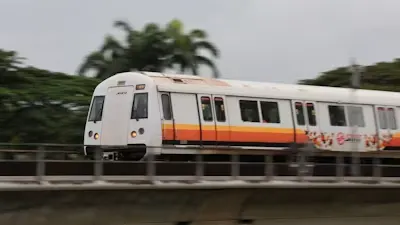
For international students arriving in the Lion City, the city-state boasts exceptional connectivity, which makes getting around Singapore stress-free and reliable for newcomers. Singapore offers clean and highly sustainable public transportation. This integrated transport system ensures you can travel seamlessly from your residence to the campus. Moreover, utilising public transport is recognised as the safest way of getting around.
The Singapore Train System (MRT & LRT)
The Mass Rapid Transit (MRT) serves as the backbone of the Singapore train system and a popular way of getting around Singapore. Spanning over 200 kilometres with more than 120 stations, the network enables you to cross the island in around an hour. Taking the MRT in Singapore is often a good way to beat traffic and get to your lectures on time.
The MRT is complemented by the Light Rail Transit (LRT) loop lines, which serve localised residential estates. Together, this automated Singapore train system operates driverless trains with extreme precision.
- Peak-Hour Commutes: As lectures often coincide with peak periods, ensure you allow extra travelling time to navigate the heavy crowds.
- Route Planning: Utilise digital network maps or official apps from the Land Transport Authority (LTA) to plan your journey and track train timings seamlessly.
- In-Station Facilities: Every station is equipped with passenger service centres, passenger lifts, and tactile paving.
| Key Rail Lines of Singapore | ||
|---|---|---|
| Line Name | Colour | Key Connectivity |
| East-West Line | Green | Changi Airport, Clementi, Dover |
| North-South Line | Red | Orchard, Woodlands, City Hall |
| North East Line | Purple | HarbourFront, Little India, Punggol |
| Circle Line | Orange | Bayfront, Esplanade, Kent Ridge |
| Downtown Line | Blue | Bukit Panjang, King Albert Park, Chinatown |
| Thomson-East Coast Line | Brown | Woodlands North, Great World, Gardens by the Bay |
Public Bus Services
When destinations are away from train stations, public buses provide connections across Singapore. The island-wide bus fleet is fully air-conditioned, exceptionally clean, and highly safe. This comprehensive network of transportation in Singapore links heartland neighbourhoods with major urban centres.
Bus stops are located every few hundred metres, featuring clear route information panels. This ensures that getting around Singapore by bus remains straightforward even for newcomers.
- Boarding and Alighting: Commuters must tap their card upon boarding at the front and tap off at the rear exit.
- Discontinued Night Buses: Late-night public buses (NightRider and Nite Owl) were officially discontinued in June 2022.
- Private Midnight Options: Weekend revellers can catch private late-night buses operated by A&S Transit (NS-1 and NS-2) for a flat fee.
Fares, Payment Methods, and SimplyGo
Singapore uses a distance-based fare structure where bus and train fares are calculated based on the exact distance travelled. This integrated system means transfers between a Singapore train and a public bus are consolidated as a single continuous journey, provided you transfer within 45 minutes.
Singapore’s public transport uses SimplyGo, offering a completely cashless and convenient way to travel. Commuters can also pay using contactless bank cards or mobile wallets without purchasing a separate travel card.
- CEPAS EZ-Link: The traditional stored-value card that shows your deducted fare and remaining balance at the gantry.
- SimplyGo EZ-Link: Transitioned to the account backend; fares are tracked via the mobile application.
- Cash Drawbacks: Paying cash on buses is possible but adds a $0.22 surcharge, requires exact change, and forfeits all transfer discounts.
- Contactless Cards: Tap in and out using any contactless credit card, debit card, or mobile wallet. Fares are billed directly via SimplyGo.
Navigation Apps and Digital Toolkits
Equipping your smartphone with local transit applications is essential for getting around Singapore like a local. These tools provide real-time updates to help you avoid long waiting times at bus stops.
- SimplyGo App: Essential for registering your travel cards, tracking transactions, viewing fare deductions, and submitting claims.
- MyTransport.SG: The official LTA app provides live bus arrival times, route planners, and train station updates.
- Google Maps: Extremely reliable for transit navigation directions, walking routes, and journey time estimations.
- SG MRT: A lightweight, highly efficient app designed to check the rail network map quickly offline.
Eco-Friendly Travel: Walking and Cycling
For shorter distances, eco-friendly methods are ideal, cost-effective, and healthy alternatives. The Land Transport Authority is continuously expanding the dedicated cycling path network across the island, especially in scenic coastal areas like East Coast Park. Commuters can easily use bike-sharing services like Anywheel to pick up and drop off shared bicycles at designated parking spots. Furthermore, pedestrian footpaths in Singapore are well-lit, exceptionally well-maintained, sheltered against the tropical rain, and highly safe for walking.
Commuting to the SIM Clementi Campus
Commuting to the Singapore Institute of Management (SIM GE) Clementi campus is highly convenient. The campus is well-served by multiple transport routes from various parts of the island.
- Address: 461 Clementi Road, Singapore 599491.
- By Train: Alight at Clementi (EW21), Dover (EW22), or King Albert Park (DT6) MRT stations.
- By Bus: Transfer directly to connecting bus services, including 52, 61, 74, 75, 151, 154, and 184.
Check out here for more detailed information!
Conclusion: Embodying the Local Rhythm
In conclusion, getting around Singapore is efficient, clean, and well-connected. While international private university students pay standard adult fares, the public transportation system remains affordable. By using contactless cards, downloading navigation apps, and following local transit etiquette, you will soon be able to navigate the city with confidence.